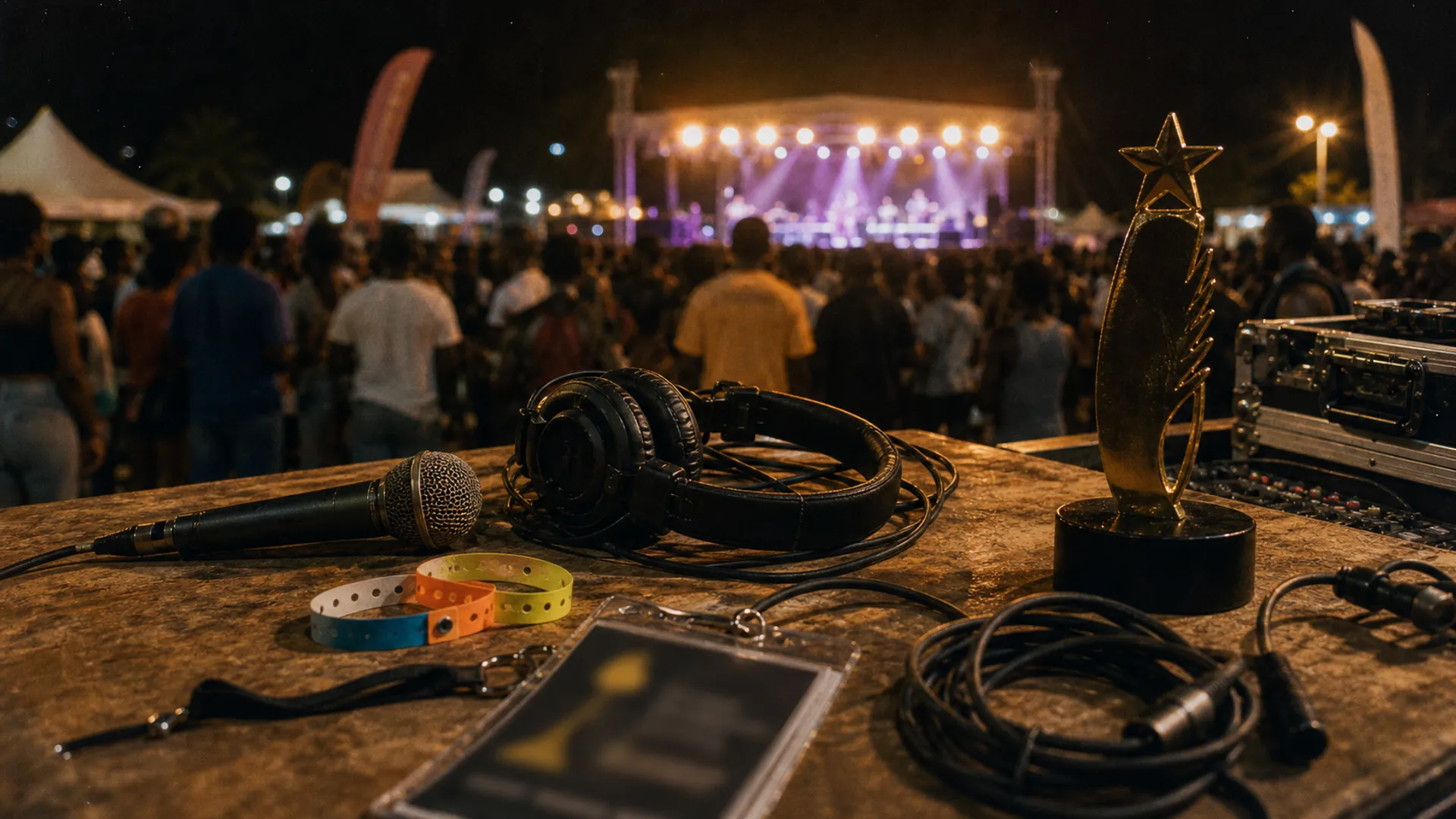


In short. In 2024-2026, Bouyon receives its public frames: Billboard, The Guardian, RFI, the Bouyon Road March 2025 (RAGS as inaugural winner), Caribbean Music Awards (Asa Bantan People's Choice 2024; Mr Ridge Artist of the Year 2024, 2025 and 2026), Big Bad Bouyon Miami, the Bouyon SXM festival, Eurockéennes 2025. This consecration does not move the origin (Dominica remains the source; Guadeloupe and SXM are transformation scenes). The real limit is not success: it is confusion, wrong credits, forgotten producers, EDM/pop crossover mistaken for origin.
Whether you have followed the series from Chapter I or you are opening the dossier here, this final chapter asks the question that separates genres that last from genres that fade: Bouyon finally has the spotlight, who will keep the memory? You are going to see why a recognized genre is not automatically a well-told genre, and why naming a producer, a woman, a territory or a credit matters as much as hitting a million streams.
The moment the word becomes public
"Boy, when all you started, all you should change the name." On BRUKOUT TV in April 2025, Triple Kay remembers the years when the word itself was the problem: you had to call the music something else to be taken seriously.
At the end of a story like this, the temptation would be to close with a simple victory: Bouyon won. It is in media, festivals, ceremonies, platforms, playlists, diaspora stages. It leaves Dominica, crosses Guadeloupe, Saint-Martin, France, England, Miami, social media, producers' studios and pop imaginations.
But a genre does not win only because it becomes visible. It wins when it remains legible.
That is the difference between consecration and confusion. Consecration says: Bouyon is strong enough to be named by Billboard, by RFI, by festivals, by awards, by events built around it. Confusion says: since everyone uses it, the story can be told any way people want, roles can be mixed, producers can be forgotten, origin can be moved, connectors can be turned into founders.
So this final chapter has to hold two truths at once. Yes, Bouyon has crossed a threshold. No, that threshold does not make precision less necessary. It makes precision more urgent. The farther the sound travels, the stronger its memory has to be.
Recognition is a door. Memory is what keeps someone from erasing the name written on the house.
Institutions do not create Bouyon, they make it visible
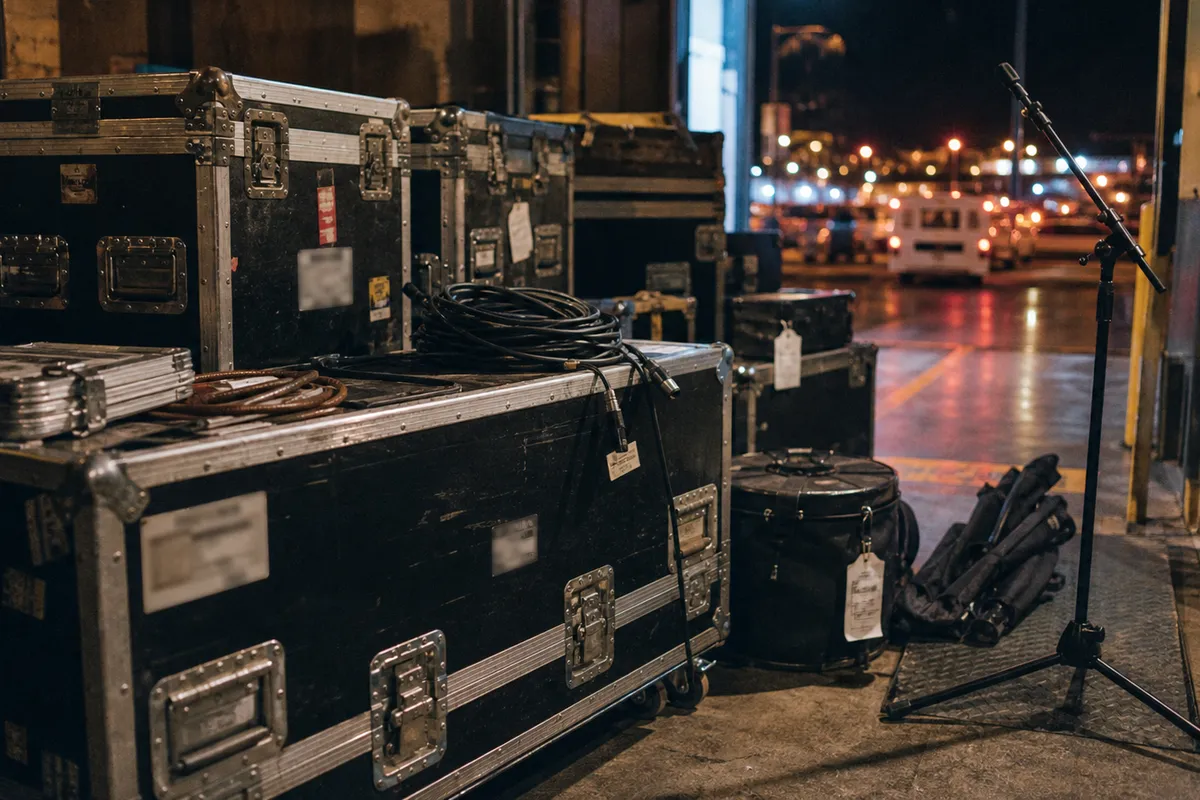
When a culture becomes institutional, its surface changes. Bouyon lived for decades through bands, sound systems, parties, clashes, studios, carnival roads, clips, shared files, poorly archived videos. In 2025, several frames give the genre another kind of public presence.
Dominica's Bouyon Road March formalizes a named space: a competition, votes, and RAGS by Trilla-G, Skinny Fabulous and Shelly, whom Soca News calls the inaugural winner. One clarification is needed here, because the sources disagree: Dominica News Online had already run "first-ever Bouyon Road March" back in 2019, when Triple Kay's Heat took a People's Choice Bouyon Road March with 70% of the vote. The same promoter, Emile Depooter, stands behind both. What is new in 2025 is the integration into Mas Domnik itself. That is not just an award. It is an institutional sentence: Bouyon deserves its own measure inside carnival.
The Caribbean Music Awards add another layer. The ceremony opens a Bouyon category in 2024, and Mr Ridge wins Bouyon Artist of the Year at every edition: in 2024 and 2025 in Brooklyn, then on September 19, 2026 in Port of Spain, at the National Academy for the Performing Arts. It is the fourth edition, and the first held in the Caribbean. This time Guadeloupe also leaves with trophies: 1T1 and Theomaa win Bouyon Song of the Year with "Bouwéy" and French Caribbean Song of the Year with "Ouba". Dominica places eight artists among the Bouyon nominees, from Asa Bantan to Reo, from Pudaz to Khallion, and its government sponsors the categories. The same ceremony had already installed Asa Bantan as a pan-Caribbean reference figure: his People's Choice Award in 2024 places him ahead of Kes, Patrice Roberts, Skinny Fabulous, Shenseea and Yung Breda. The symbol matters: Bouyon enters a pan-Caribbean ceremony born in Brooklyn, a diaspora space where Caribbean music looks at itself, then comes back with it to the Caribbean.
On the island itself, the Dominica Music Awards have their own Bouyon category. On Saturday 3 January 2026, in Portsmouth, the 2025 edition names Pudaz Bouyon Artist of the Year, and the same night Ridge, who produces part of his tracks, Producer of the Year.
Then come the dedicated festivals. Big Bad Bouyon Miami connects the genre to Miami Carnival, but inside an explicitly Bouyon frame. In Saint-Martin/Sint Maarten, the Bouyon edition of Strictly the Best does more than build a line-up: it creates a regional appointment where Dominica, SXM and nearby scenes recognize the same fire.
These institutions do not invent the genre. They do not replace WCK, Triple Kay, Asa Bantan, Vador, J2MO, Tolly Boyz, 1T1, Holly G, Mr Ridge or the field scenes. They do something else: they give fixed points to a history that has often moved too fast to be archived properly.
Media open the door, but the door can distort
WCK has a line for this sequence: with anything new, the negative always comes before the positive. The band lived it twice, in 1988 and again when the genre came back under the eye of the press.
Media changes the destiny of a word. When Billboard writes about Bouyon, the genre becomes easier for international audiences to find. When The Guardian places Bouyon and Dennery Segment among the sounds reshaping contemporary carnivals, British audiences receive a vocabulary. When RFI presents 1T1 as a new-generation voice, Bouyon Gwada receives a clearer place in francophone media.
These are good signals. They give Bouyon an existence outside the circles that already knew it. They help listeners, journalists, programmers, DJs, platforms and festivals avoid treating the sound as nameless "Caribbean energy."
But media always simplifies. It needs faces, titles, shortcuts, quick lines. It loves the story of the "new sound blowing up." Bouyon is not a new sound. It is a long story: a Dominican inheritance, a band grammar, a stage competition culture, a Guadeloupean graft, an SXM line, producers, women, sub-forms, diasporas, artists who do not all do the same thing.
So media visibility is useful only if it works as an entrance, not as the final summary. An international article can open the door. It should not become the only keeper of the history.
Crossover is a force, not proof of belonging
Bouyon also grows because it can be crossed. Major Lazer and Bunji Garlin around G.O.A.T. Bouyon Mixes show how an EDM/crossover circuit can take up Bouyon energy and expose it to another audience. Theodora shows how a Bouyon color can enter a highly visible French pop trajectory. Eurockéennes shows how Holly G, Totally Spice's and the Bad Gyal Bouyon aesthetic can reach a mainstream French festival without completely losing Antillean geography.
Those openings should be welcomed without losing the right words. A connector can be valuable without becoming an origin. A pop artist can amplify without becoming central to the genre. An international DJ can validate a color without refounding the music. A collaboration can widen an audience without erasing the scenes that carried the sound first.
Crossover becomes dangerous only when it turns visibility into ownership. Outside audiences sometimes discover Bouyon through a figure that is more accessible, more pop, more media-facing. That is normal. What is not normal is letting that first encounter replace the entire map.
The right story does the opposite: it uses the door to bring people back to the house. If someone discovers Bouyon through Theodora, Holly G, Major Lazer, 1T1 or Mr Ridge, the editorial work is to then show WCK, Dominica, Triple Kay, Asa Bantan, the producers, the DJs, the women, the territories, the harder sounds, the slower forms, the studios and the roads.
The limits: origin, credit, archives
The first limit is origin. Bouyon was born in Dominica. That sentence has to remain simple, repeated and visible. Guadeloupe transformed the genre, recharged it, made it francophone, hardened it, slowed it down, carried it into the New Bouyon Wave. Saint-Martin built its own line, from Tolly Boyz to recent festivals. France, the United Kingdom, Miami and platforms amplify it. But origin does not move just because audience moves.
The second limit is credit. Bouyon has too often been told through voices alone. This series showed something else: Cornell Phillip and WCK in the original grammar, J2MO in Gwada production, Dada through the Famalay door, DJ Taffy in the riddim economy, 1T1, YSN, DJ Luchshiy, DJ Skycee and others in the new factory, with DJ Softee on the DJ, composition, voice and connection side. If producers, composers and connectors disappear, history becomes flat. It keeps only the faces in front of the camera.
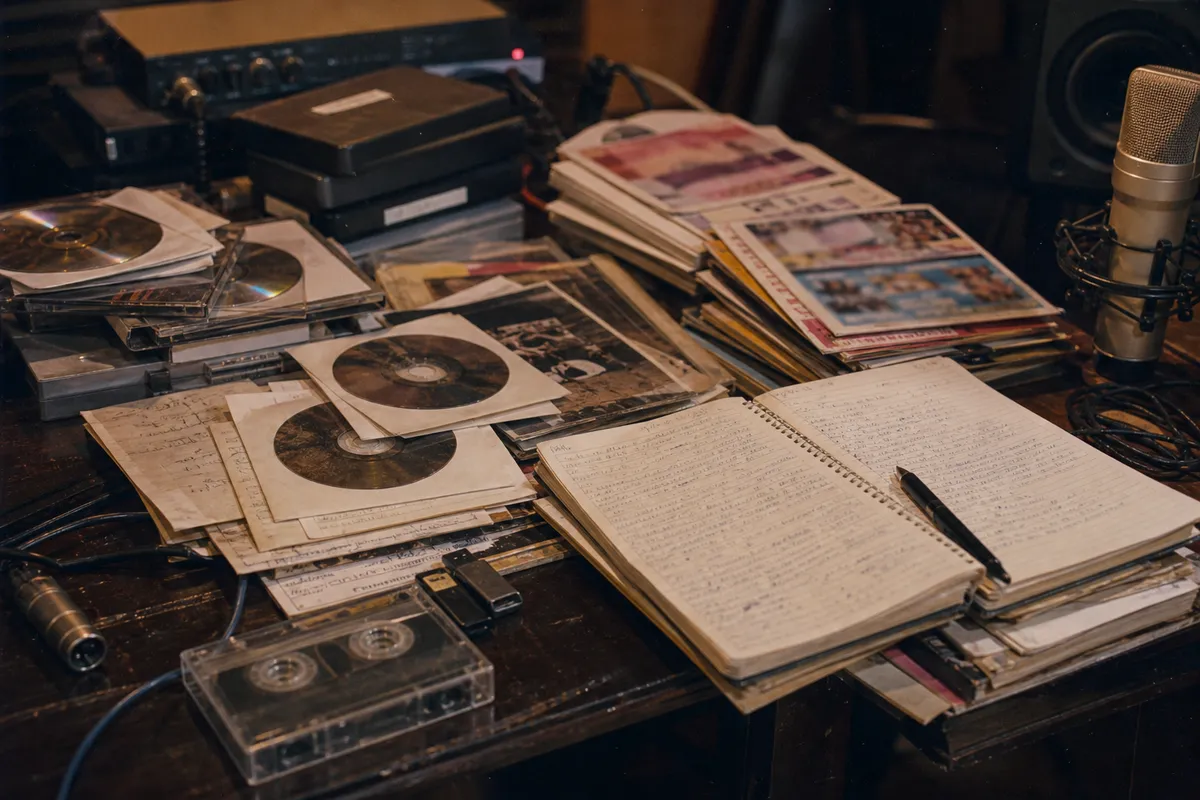
The third limit is the archive. Many Bouyon traces are fragile: deleted videos, missing credits, poorly dated releases, lost mixtapes, inactive accounts, informal labels, memories of parties that are not enough as public sources. That is why documentation has to happen as the genre moves. Not to make the music academic. To keep it from being rewritten by people who arrive later.
The fourth limit is category. Not everything is Bouyon because it hits fast. Not everything is Warm Up because the tempo drops. Not everything is Nasty Business because it feels dark. Not everything is RnBouyon because a voice becomes melodic. Sub-forms should help people understand, not inflate tags.
What this series had to protect
This series did not try to lock Bouyon inside a museum. Living music does not fit in a display case. It mutates, steals, answers, bites, misses, comes back stronger. Bouyon is exactly that kind of music: local enough to have a soul, flexible enough to survive several territories.
But openness needs a spine. Without it, everything becomes decoration: a bassline, a shout, a dance, a tropical color, a word added to a release because it helps sell it. With it, Bouyon can grow without losing its center.
That spine holds through a few simple rules. Say Dominica when speaking of the origin. Say Guadeloupe when speaking of Gwada transformation. Say Saint-Martin when speaking of the SXM line. Say producer when the producer moves the sound. Say connector when someone opens a door without belonging to the core. Say women when female voices carry export instead of pushing them aside. Say uncertain when information is not strong enough to become public.
That is not cold caution. It is respect.
Bouyon now enters a phase where it can win more stages, more awards, more streams, more bookings, more collaborations. The real question is not whether it can go far. It has already started. The real question is whether it can go far with its names, places, producers, women, conflicts, mistakes and origins still visible.
If it can, consecration will not only be a moment of light. It will be a memory that stands.
FAQ : common questions about Bouyon consecration and limits
Is Bouyon a recognized genre today? Yes. In 2024-2026 it received several institutional frames: Bouyon Road March in Dominica (RAGS as 2025 inaugural winner), Caribbean Music Awards (Asa Bantan People's Choice 2024, Mr Ridge Artist of the Year 2024, 2025 and 2026), Big Bad Bouyon Miami, the Bouyon SXM festival, Eurockéennes 2025. Plus Billboard, The Guardian, RFI coverage. But recognized does not mean well told, that is exactly the topic of this chapter.
Does Bouyon come from Dominica or Guadeloupe? Dominica. It is the base rule and it does not change. WCK founds the genre in Roseau in 1988. Guadeloupe is a major transformation scene (Act II: Vador, Yellow Gaza, Gaza Crew; Act III: New Bouyon Wave), Saint-Martin has its own line (Tolly Boyz), France and the UK amplify. But the origin does not move just because the audience moves.
Is Theodora a Bouyon artist? No, not in the strict sense. Theodora is a French pop artist who integrates a Bouyon color into a highly visible crossover trajectory. She amplifies the genre toward audiences who didn't know it, valuable as an entry door. But treating her as a central figure of Bouyon would be a typical confusion: the connector is not the origin.
What is the deal with Major Lazer and Bouyon? An EDM/crossover relay. The G.O.A.T. Bouyon Mixes (2025) with Bunji Garlin expose Bouyon energy to a global electronic audience. Useful for international visibility, dangerous if it implies that Major Lazer or Mad Decent co-founded the genre. The Caribbean chain (WCK, Triple Kay, Asa Bantan, Vador, Mr Ridge, 1T1, Holly G) remains the origin.
Why does Mr Ridge win Artist of the Year three times in a row? Because he embodies the artist-producer-entrepreneur fusion that recent Bouyon values. Mr Ridge / Coleridge Bell is not only a voice: he produces, he carries the Nasty Business aesthetic, he builds a brand, he thinks export. The 2024, 2025 and 2026 Caribbean Music Awards reward that density of function.
Why does RAGS at Bouyon Road March 2025 matter? Because it names a category. Mas Domnik (Dominica's carnival) now integrates a dedicated Bouyon competition, with votes and an inaugural title. RAGS (Trilla-G, Skinny Fabulous, Shelly) enters history as the first winner. Beyond the single itself, it is an institutional sentence: Bouyon deserves its own measure inside the biggest Dominican carnival.
What are Bouyon's real limits today? Four. (1) Origin: risk that crossover lets Dominica fade. (2) Credit: producers, composers and connectors erased behind the voices. (3) Archive: too many fragile traces (deleted videos, missing credits, lost mixtapes). (4) Category: not everything is Bouyon because it hits fast, not everything is Warm Up because the tempo drops. Precision is the only safeguard.
What comes after the series? Documentation. This series laid out a 12-chapter spine; the archive stays open. Every new credited single, every named woman, every visible producer, every documented scene sharpens the story further. The 1T1 special (read) is an example of song-by-song registry work, it is meant to continue.
End of series : what comes next
The 12-chapter series ends here, but the work continues. The 1T1 special article (read) extends the story by following the 1T1 production line song by song, and other dossiers will enrich the archive.
→ Back to the Bouyon hub, the interactive 3D map of the 12 chapters and 130 artists.
→ End of series
Back to the Bouyon dossier → "The series is finished, but the archive stays open: every new release, every credited producer, every documented stage can still sharpen the history."
