

In short. Bouyon's global crossover does not begin with a viral song, but with out-of-circle circulation: 2019 and Famalay (Vincentian and Trinidadian Soca, Dominican production by Dada), June 2025 and Billboard running a full feature on it, and that same year institutions (Bouyon Road March in Dominica, Big Bad Bouyon in Miami, festival in Saint-Martin, Caribbean Music Awards in Brooklyn). The trap: confusing cross-genre connector with Bouyon artist.
You saw Theodora in the French charts, heard Major Lazer release a "Bouyon-powered" single, read a Billboard piece on the genre, what actually belongs to Bouyon in all that is another matter. This chapter gives a simple grid: who is a Bouyon artist, who is a Bouyon producer, who is a cross-genre connector, who is a pop artist borrowing a color. Four different roles, never to be mixed up, especially in a party debate.
Leaving the local circle
"Only after I said that, this is when people start watching Dominica." That's Triple Kay on BRUKOUT TV in April 2025, pinning down the exact moment outside attention swung toward the island. One sentence, and a whole country enters the frame.
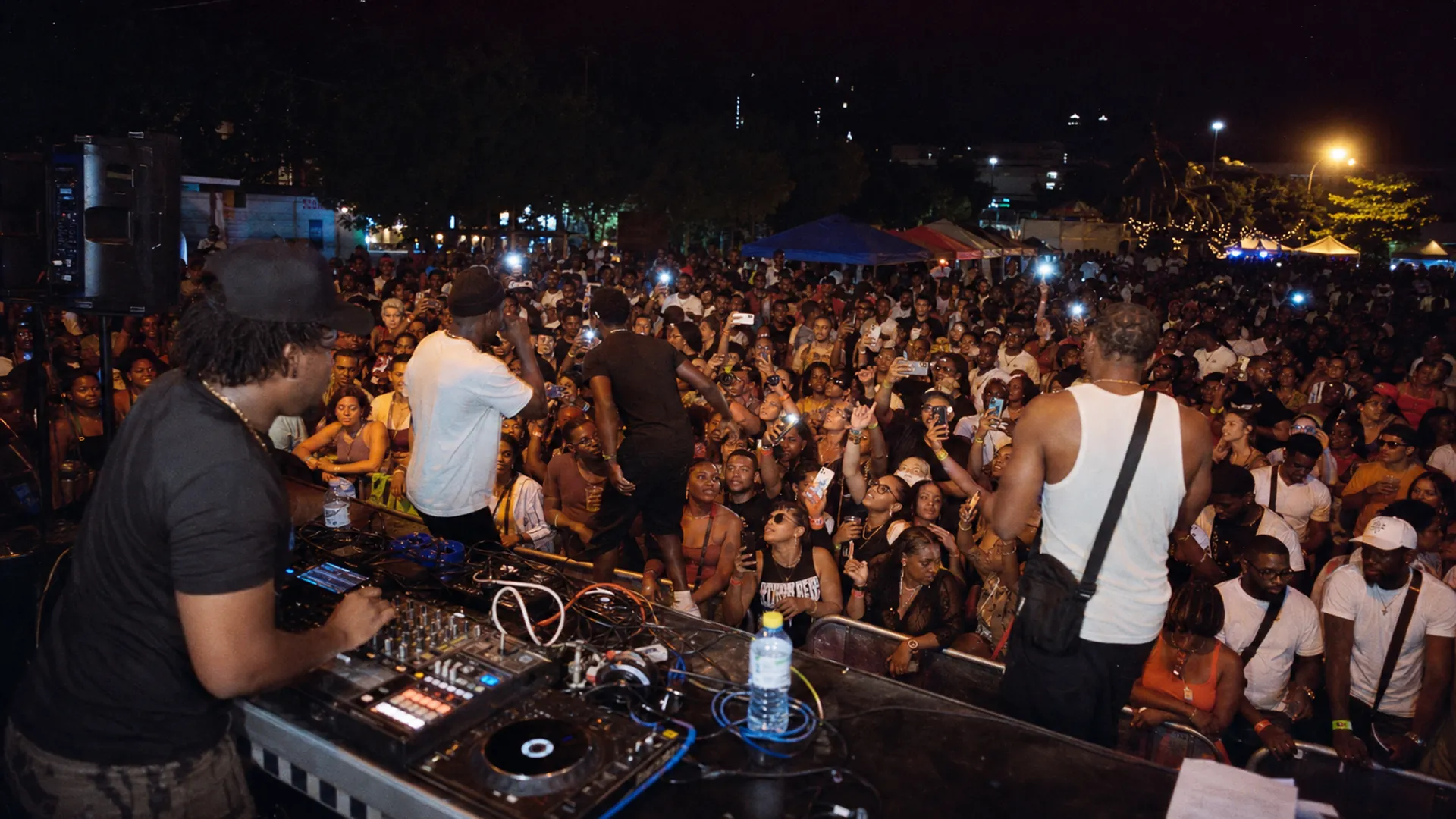
After Warm Up, Bouyon enters a heavier question: what happens when a sound born in tight rooms, carnivals, small studios and neighborhood parties becomes playable everywhere? The global crossover does not only mean "more views." It means Bouyon leaves its natural circle and starts moving through spaces that do not always know its history.
That is where the story has to stay precise. Bouyon can travel through an artist, a producer, a riddim, a festival, a DJ, a media outlet, a dance or a simple viral video. All of those paths matter, but they do not tell the same story. An artist who performs over a Bouyon color does not automatically become a Bouyon artist. A producer who places Bouyon rhythm inside a Soca song does not disappear behind the more famous singers. A pop artist borrowing a Bouyon pulse can open a door without carrying the whole culture.
So the globalization of Bouyon begins with two demands at once: widen the field without blurring the roles. If the genre is going to be explained to the world, its sources, connectors, producers and scenes have to be named.
Bouyon does not become global by ceasing to be local. It becomes global when its origin stays visible while it crosses borders.
2019: Famalay and the Trinidad door
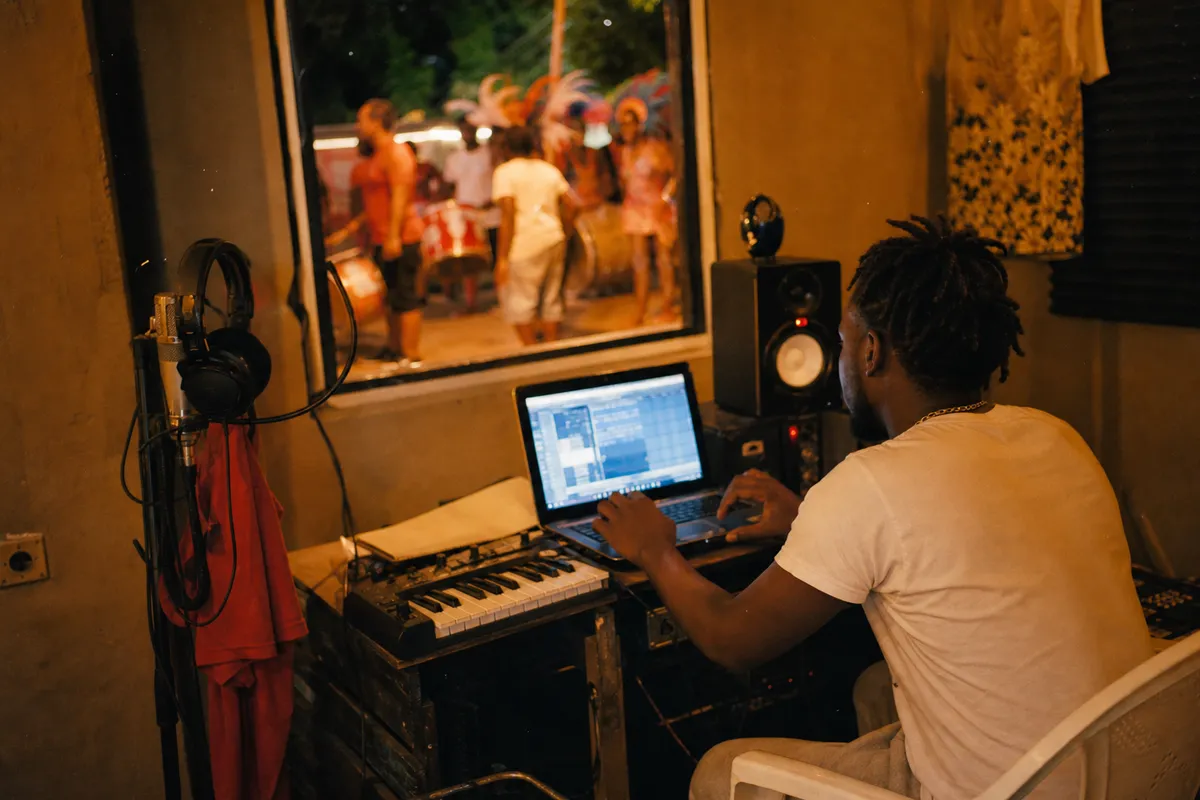
A striking signal of Bouyon crossing into Soca appears in 2019 with Famalay. The song brings together Skinny Fabulous, Machel Montano and Bunji Garlin, three major Soca names, but the mechanism behind the record reminds us of a truth often flattened by star power: Dominican producer Dada plays a key role in shaping the sound.
The point is not to rename Machel, Bunji or Skinny Fabulous as Bouyon artists. That would be false and useless. The point is to see what Famalay makes possible: Dominican energy can enter the Trinidadian machine, reach a huge audience, and come back as proof that Bouyon can speak to other carnivals.
This kind of crossover works like a sonic passport. Soca audiences receive a rise, a hook, a pulse, a party. People who know the grammar also hear Bouyon. Between the two, credit can get lost. That is why producers and origins need to be told with the same care as front-facing voices.
The next step confirms that logic. When Major Lazer and Bunji Garlin push a "Bouyon-powered" reading around G.O.A.T., it is not the birth of Bouyon in EDM: it is external validation, a moment when a global circuit recognizes that this energy can run through its own machines.
2024-2025: media begin looking at the source
In June 2025, part of the international press stops treating Bouyon as Caribbean background noise. Billboard publishes a feature on the genre, with WCK, Asa Bantan and Shelly inside the story. This is not America discovering Bouyon. It is a heavyweight music outlet finally writing down a word that shapes how industries classify music.
That nuance matters. Dominica did not need Billboard to know what it had created. But when a media outlet of that size writes the word Bouyon, it gives outside audiences an entry point. The genre becomes easier to cite, search, classify and playlist. It is less romantic than a concert, but in the platform age it is decisive.
On the British side, the reading confirms something else: Bouyon moves with diasporas. As early as 2024, DJ Taffy describes the Notting Hill effect, the presence of Shelly and Asa Bantan, and the growing place of francophone territories in Bouyon listening. In 2025, The Guardian also places Bouyon and Dennery Segment among the sounds reshaping contemporary Caribbean carnival spaces.
This is not a straight line. Bouyon does not arrive in Europe or the United States all at once. It passes through DJs, private parties, after-parties, videos and smaller communities than the Jamaican or Trinidadian diasporas. That fragility is exactly why every documented trace matters.
Francophone spaces become an accelerator

France and the French Antilles are not only a receiving market. They become an amplification zone. 1T1 gives this shift a clear face: Guadeloupean, production-driven, influenced by Dominica, he tells Loxymore about wanting Bouyon to reach "another step". The English-language strategy, collaborations, platform work and French media recognition give Gwada Bouyon a new reach.
That reach does not move through one face only. It moves through a network: 1T1, MiiMii KDS, Holly G, Totally Spice's, Aknose, Theomaa, Le Juh, TIITII NBA, producers, beatmakers, DJs and local networks turning a scene into circulation. A crossover is not only a hit: it is an environment able to move several names at once.
This French route has its forerunners too. The Paris duo Boutcha Bwa, producer Ken'zii and singer Koko, is among the first to make bouyon from mainland France, from 2012, according to ARTE's Tracks programme. In May 2014, a bouyon remix of Elephant Man signed by Ken'zii is already circulating; in November 2018 comes Bouyon Enerver, and in 2020 the duo composes Arendi's Rété Akaz aw. In September 2024, ARTE gives them part of its episode "Bouyon: transgression at 160 BPM", then books them for concerts in December 2025, in Paris and Lyon.
Theodora shows the other side of the coin. Her French visibility is massive, and Billboard France places her inside a broad francophone streaming landscape. But that does not mean Theodora should be filed as a Bouyon artist in the same way as an artist rooted in the Bouyon scene. Her role is different: she proves that a Bouyon color can be absorbed by French pop, start a national conversation and open ears that would never have searched for the genre on their own.
That is exactly where the story has to be mature. Theodora's impact can be recognized without erasing Dominica, Guadeloupe, producers, local voices and the artists who live inside the genre before mainstream exposure. Crossover is useful when it expands the map. It becomes dangerous when it replaces the map.
2025: institutions create a frame
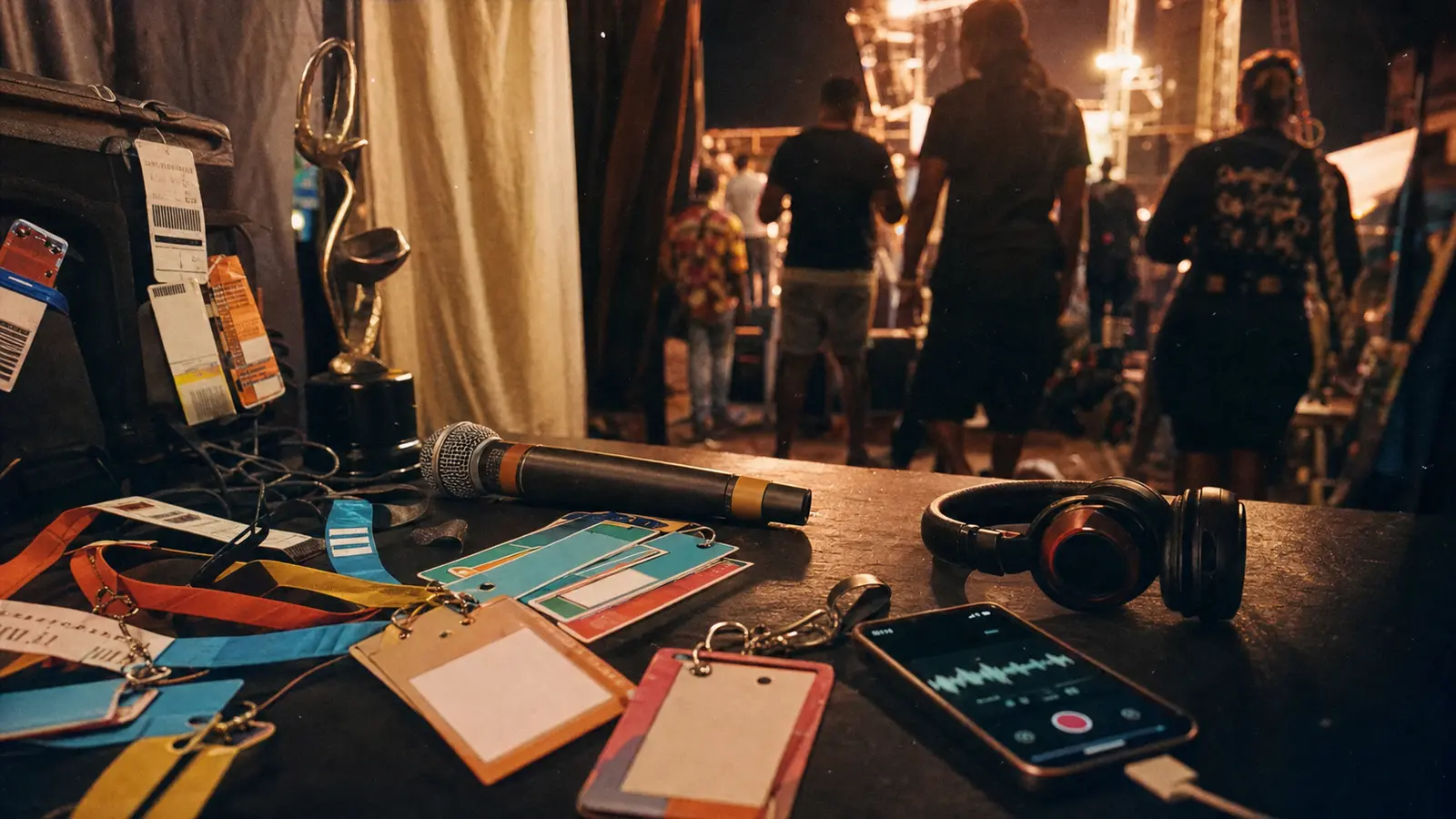
Asked at the Karukera One Love Festival, WCK put it differently: "now is the time for Buyo and it was the right time." The band that invented the genre's grammar in 1988 takes no victory lap: they simply note that the window opened. They add that with anything new, the negative always comes before the positive.
A genre becomes global when it gains stages, awards, appointments and categories. In 2025, several signals point in that direction. Dominica's Bouyon Road March enters Mas Domnik, and RAGS by Trilla-G, Skinny Fabulous and Shelly wins it. Soca News calls it an inaugural win, but Dominica News Online had already run "first-ever Bouyon Road March" in 2019, for Triple Kay's Heat: the sources disagree. Again, the record is hybrid: it touches Soca, Bouyon, the road and competition. But the institution names Bouyon.
At the Caribbean Music Awards, Mr Ridge is awarded Bouyon Artist of the Year in 2024 and 2025, in Brooklyn. The detail matters: Bouyon is no longer only an energy people use at parties. It becomes a category observed by a pan-Caribbean institution born inside a diaspora center. On September 19, 2026, the ceremony leaves New York for Port of Spain. Ridge wins there a third time, and "Bouwéy" by 1T1 and Theomaa, from Guadeloupe, takes Bouyon Song of the Year.
The same year, Big Bad Bouyon Miami sends another signal. Miami is not the birthplace of the genre, but it becomes a dedicated North American base connected to Miami Carnival and a diasporic audience. In Saint-Martin/Sint Maarten, an inaugural Bouyon festival also gathers a regional scene around an explicitly Bouyon-branded event.
These frames change the conversation. Before, many traces existed but stayed scattered: a clip, a party, a DJ set, a YouTube video, a viral sound. Institutions create markers. They make it possible to say: here, Bouyon is programmed, judged, celebrated, announced and expected.
West Africa: the beat that travels alone
The crossover does not always move through a voice, a festival or an award. Sometimes it is the beat that leaves on its own. The clearest case comes from a production by Dominican beatmaker Little Boy. His instrumental first comes out in October 2020 under "CHICHI" by Lunik. It returns in September 2021 under "Bandit (Oui Oui Oui)" by Holly G, the track that establishes the trio in Gwada Bouyon.
Fourteen months after that first release, the same instrumental resurfaces on the other side of the Atlantic. In December 2021, Ivorian rapper Fior 2 Bior puts out "Godo Godo" over it. A rhythmic grain born in the Caribbean ends up at the heart of a West African afro-rap and coupé-décalé track, with no Bouyon artist on the mic.
It is a textbook case for this chapter's grid. Fior 2 Bior is not a Bouyon artist: he is an artist from another genre who carried a Bouyon beat into his world. The role to name, once again, is not the performer's but the producer's: Little Boy, whose instrumental traveled all the way to West Africa without the whole genre following it. Bouyon exports itself that way too: through its beats, quietly, inside music that does not carry its name.
The border protects the story
The global crossover forces us to mention names that do not all stand in the same place. Skinny Fabulous, Machel Montano and Bunji Garlin are Soca artists first, even when they touch a Bouyon moment. Lady Lava remains a Zess artist, even when a collaboration or riddim crosses the Bouyon ecosystem. Nessa Preppy belongs first to a Soca/Dancehall zone. These links can matter, but they should not become shortcuts.
That rigor is not a shutdown. It makes Bouyon more credible. A global genre does not need to inflate its story. It needs to show how it actually circulates: through producers, voices, DJs, festivals, categories, platforms and communities.
Bouyon therefore enters a new phase. It is no longer only defended by those who created it, nor only transformed by those who picked it up. It is now explained, classified, sometimes misunderstood, sometimes celebrated, sometimes absorbed by other scenes. That is the price of visibility.
The next chapter has to look at another line, too often treated as secondary even though it carries a huge part of recent export: the women of Bouyon.
FAQ : common questions about Bouyon's global crossover
Is Famalay (2019) a Bouyon single? No. Famalay remains a Soca single fronted by Skinny Fabulous, Machel Montano and Bunji Garlin. But its rhythmic engineering comes from Dominican producer Dada. It is a crossover where Bouyon energy travels through production, not a move of the whole genre into Soca.
Is Theodora a Bouyon artist? No. Theodora is a francophone pop/crossover artist using a Bouyon color. She widens the audience and makes the word known, but she is not part of the Bouyon scene (unlike Carlyn XP, Holly G, Totally Spice's, MiiMii KDS or Faithii). Her role is amplifier, not origin.
Which institutions recently recognized Bouyon? Three strong markers in 2025: the Bouyon Road March integrated into Mas Domnik (2025, won by RAGS), Mr Ridge crowned Bouyon Artist of the Year at the Caribbean Music Awards (2024 and 2025 in Brooklyn, 2026 in Port of Spain), and the creation of Big Bad Bouyon Miami at Miami Carnival. An inaugural Bouyon festival is also held in Saint-Martin/Sint Maarten.
When did Billboard run a full feature on Bouyon? On June 27, 2025, with "Inside Bouyon", which cites WCK, Asa Bantan and Shelly. Billboard France had already covered it on April 1, 2025, in an analysis of shatta and bouyon in the French charts. In 2025, The Guardian also places Bouyon and Dennery Segment among the sounds reshaping contemporary Caribbean carnivals (notably with Notting Hill presence).
Why is 1T1 cited as a francophone accelerator? Because he combines several levers: Guadeloupe roots, production training, Dominican influence, strategic English-language choice, platform work and French media recognition (Loxymore Paris interview, 6 December 2024). That combination gives Gwada Bouyon a new reach beyond its territory.
Does Major Lazer make Bouyon? No. When Major Lazer and Bunji Garlin release a "Bouyon-powered" single around G.O.A.T., it is not the birth of Bouyon in EDM. It is external validation: a global circuit recognizes that Bouyon energy can pass through its own machines.
Is Fior 2 Bior's "Godo Godo" a Bouyon track? No. "Godo Godo" (2021) is an Ivorian afro-rap and coupé-décalé track, built on a Bouyon instrumental by beatmaker Little Boy, the same one behind Lunik's "CHICHI" in 2020 and Holly G's "Bandit" in 2021. It is an example of Bouyon production traveling: the beat reaches all the way to Côte d'Ivoire, but the artist and the track's genre stay Ivorian. The Bouyon role to remember is the producer's, not the performer's.
How do you avoid getting it wrong in a party debate? Learn four roles: Bouyon artist (catalogue, stage, language inside the genre, e.g. Asa Bantan, TIITII NBA, Carlyn XP), Bouyon producer (Dada, DJ Taffy, J2MO), cross-genre connector (Skinny Fabulous, Bunji Garlin, Major Lazer, they visit), pop artist borrowing (Theodora, she amplifies). Four different roles, not one.
