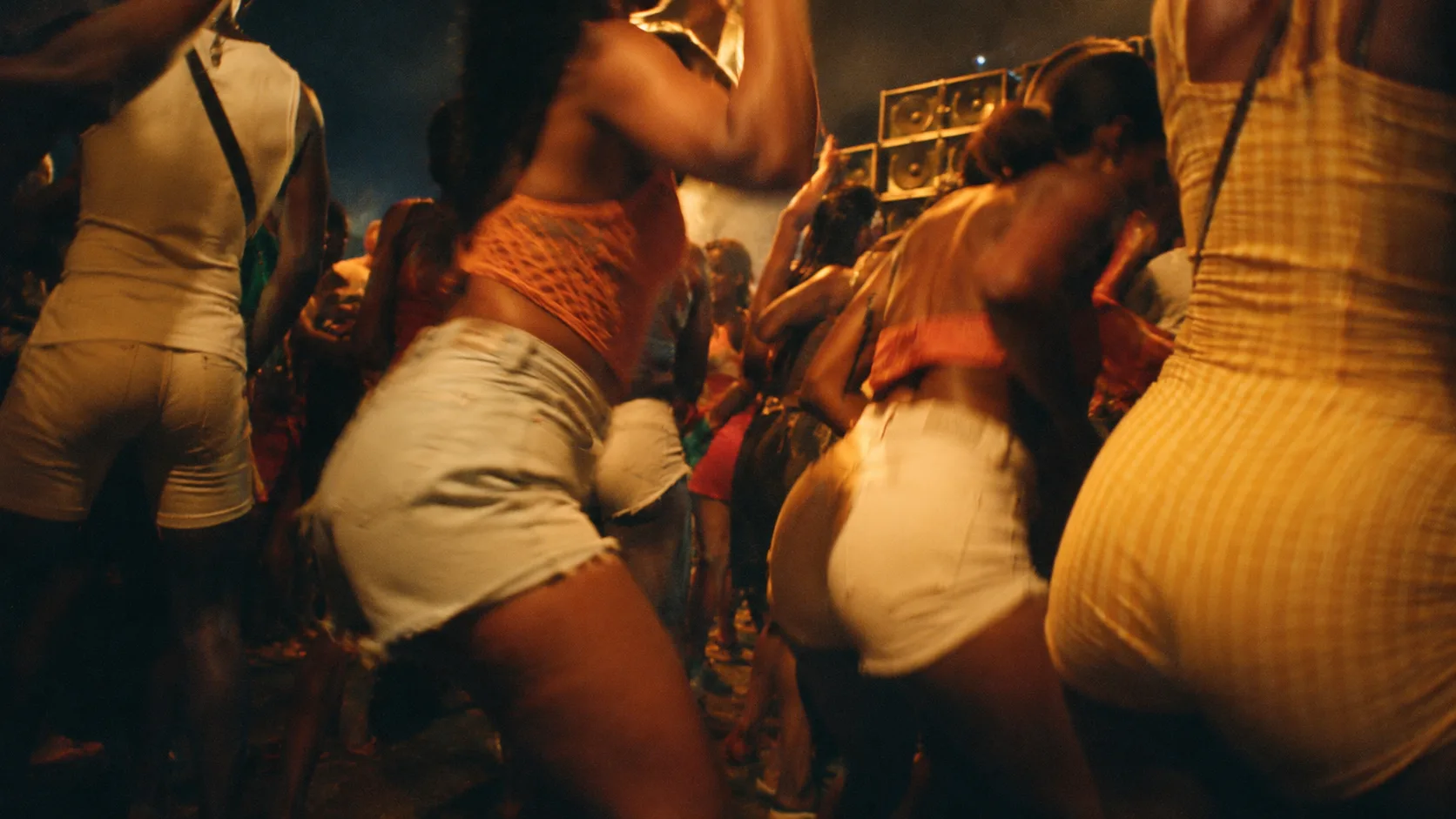
◆ Special · Guide · Dancing bouyon
Article written by TIITII NBA, artist of the New Bouyon Wave collective.
Sources: the genre's Wikipedia page, specialized press (RapCity, Outre-mer La 1ère) and internal editorial synthesis, all cited at the end of the article.
My apologies for any names or places misspelled, many of the actors are anglophones, translation and transcription can introduce slight discrepancies.
You can contribute to the blog's evolution: leave your corrections and additional info in the comments at the bottom.
In short. Bouyon is danced to a fast tempo: 152 BPM for classic bouyon, up to 160 BPM for hardcore bouyon. There is no fixed choreography. The movement starts from the hips, knees loose, in the energy of Dominica's carnival where the genre is born in 1988. You dance solo, in pairs or in groups. Today, TikTok challenges are the easiest entry point to start.
The first seconds of a bouyon track make the body react before the head. Bouyon isn't a dance of set figures you either nail or miss: it's a carnival dance, made to move fast and let go. In this guide, we trace the movement back to its roots, set out the basic principle, and look at how the young generation gets into it today through online challenges.
I. The dance comes out of Dominica's carnival
To understand how to dance bouyon, you first need to know where it comes from. The genre is born in 1988 in Roseau, Dominica, carried by the band WCK. But the dance is older than the track that gives it its name. Bouyon inherits directly from the island's traditional dances, the ones practiced for generations at carnival.
Wikipedia lists that heritage plainly: bouyon blends bèlè, kwadril, chanté mas, lapo kabwit, mazurka, jing ping and cadence-lypso. Each tradition brings its own way of moving, the lapo kabwit drum that calls the body, the collective step of chanté mas that pours into the street during carnival. Bouyon doesn't appear out of nowhere: it takes the energy of the Dominican street and plugs it into a drum machine.
That's why the dance still keeps, today, the DNA of carnival: a group movement, fast, festive, lived in a crowd as much as alone. When you dance bouyon, you replay without knowing it a gesture that descends from Roseau's carnival.
II. The principle: everything starts from the hips
If there's one thing to remember, it's this: in bouyon, the center of the movement is the hips. The hips lead, the rest of the body follows. The knees stay loose to absorb the tempo, and the weight shifts from one foot to the other on short steps. You don't need big steps: it's speed and steadiness that make bouyon, not amplitude.
And bouyon is fast. Very fast. The press sums it up in one line: "160 bpm parfois plus, c'est rapide, très rapide". 160 BPM and often more, fast, very fast. In practice, classic bouyon runs around 152 BPM, and hardcore bouyon, born in Guadeloupe, pushes to 160 BPM. That high tempo changes everything for the dance: the body has no time to think, it has to stay in continuous motion. That uninterrupted flow gives bouyon its recognizable energy.
160 BPM and often more, fast, very fast.
The other key is that there's no single correct way to dance bouyon. No federation hands out diplomas. The dance lives in feel: you lock your hips onto the beat first, you find the tempo, then you add what you want, arms, shoulders, a step, an attitude. It's a dance of freedom before it's a dance of technique.
The simplest way in is to watch. Here, Lewismelo dances to a DCAMP track: the hips hold the tempo, everything else gets added on top.
III. The bouyon that goes viral
The bouyon dance is living a second youth, and it runs through screens. Since 2024, bouyon challenges have multiplied on TikTok and Instagram: short choreographies, easy to copy, that thousands of young people pick up and reinterpret. The movement leaves carnival to enter phones, without losing any of its energy.
This wave is carried by a new Caribbean generation. In Guadeloupe, MiiMii KDS becomes one of the voices keeping bouyon spinning on social media, her releases stacking millions of views among the youngest. When a track lands, its dance lands with it: the two move together. That's exactly what makes today's bouyon easy to learn, you just follow the dancers sharing their steps online.
To start through the challenges, the method is simple: pick a video where the movement is slow enough to read, lock your hips onto the beat, keep your knees loose, and rebuild the sequence piece by piece. The steadiness of the bouyon tempo helps you: once you hold the rhythm, the rest clicks into place.
IV. Get started without overthinking
The trap, when you start, is wanting to get everything right on the first try. Bouyon doesn't work that way. It's a dance that rewards energy, not perfection. The best carnival dancers don't count their steps: they follow the sound and have fun. Start slow, on a tempo you control, then speed up as your body memorizes the movement.
Dancing in a group helps enormously. Bouyon was born collective, and that's still where it's easiest to catch: you align with the others, you copy the energy of the crowd, and the movement comes on its own. No mandatory partner, no set figure, just the rhythm and the urge to move.
One last thing: you don't learn to dance bouyon on old material. You need today's tempo, the one playing at parties right now. TIITII NBA, one of the New Bouyon Wave's eight voices, gives it to you: put on his current release and launch your first move on it. Two minutes, and you're dancing on the genre's present, not its past.
FAQ : common questions about the bouyon dance
Is bouyon hard to dance? No. Bouyon has no fixed choreography: the movement starts from the hips and follows the fast tempo. You begin with small steps, knees loose, and let the carnival energy guide the body. It's a dance of feel, not technique.
How fast is bouyon danced? Classic bouyon runs around 152 BPM, hardcore bouyon climbs toward 160 BPM. It's a fast tempo that demands continuous movement: the body stays in motion rather than in pauses.
Where does the bouyon dance come from? From Dominica's carnival. Bouyon is born in 1988 in Roseau, Dominica with WCK, inheriting the island's traditional dances: bèlè, lapo kabwit, chanté mas and kwadril. The dance descends directly from the street and from carnival.
Do you need a partner to dance bouyon? No. Bouyon is danced solo, in pairs or in groups. At carnival, it's first of all a collective dance where you follow the energy of the crowd. No couple figure is required.
How do you start bouyon on TikTok? You copy the challenges: lock the hips onto the beat, keep the knees loose, chain short lateral steps. You rebuild the sequence piece by piece, and the steady tempo helps you find the rhythm.
What's the difference between dancing bouyon and shatta? The two often cross paths at a Caribbean party, but bouyon is faster and more carnival-rooted, inherited from Dominica. Shatta, closer to dancehall, plays on a different tempo. In a single set, you often move from one to the other.
Sources
Web and press sources
- Wikipedia. Bouyon music. en.wikipedia.org · genre roots (bèlè, kwadril, chanté mas, lapo kabwit, mazurka, jing ping, cadence-lypso) and carnival link · accessed 2026-06-22. - RapCity. Le bouyon, c'est quoi ça ?. rapcity.fr · description of the fast tempo (160 BPM and above) · accessed 2026-06-22. - Outre-mer La 1ère. MiiMii KDS, the young Guadeloupean singer. la1ere.franceinfo.fr · bouyon virality 2026 among the young generation · accessed 2026-06-22. - Internal editorial synthesis. TIITII NBA Bouyon blog. tiitii-nba.com/en/bouyon · canonical facts cross-checked with web sources (1988 Roseau genesis, 152/160 BPM) · accessed 2026-06-22.
Further reading
- The Roots. Chapter I. The traditional roots the dance grows from: cadence-lypso, jing ping, lapo kabwit. - Warm Up. Chapter VIII. How bouyon's tempo is set, slowed down or sped up. - Bouyon: origin, BPM and history of the genre. The complete guide to bouyon on the blog.
Glossary
Bouyon. Musical genre born in 1988 in Roseau, Dominica, with WCK. Fast tempo (152 BPM classic, 160 BPM hardcore), heir to cadence-lypso and jing ping.
Cadence-lypso. Dominican genre of the 1970s, rhythmic ancestor of bouyon, running around 95 BPM.
Lapo kabwit. Traditional goatskin drum of Dominica, one of the rhythmic engines of carnival and of the bouyon dance.
Roseau carnival. The carnival of Dominica's capital, cradle of the collective energy the bouyon dance grows from.
How to read this guide
This guide stays alive: the bouyon dance evolves with every carnival and every challenge. If you know a variant, a regional step, or a useful resource for beginners, leave a comment, every sourced addition enriches the guide.
→ Back to the Bouyon hub · The Roots. Chapter I · Warm Up. Chapter VIII
