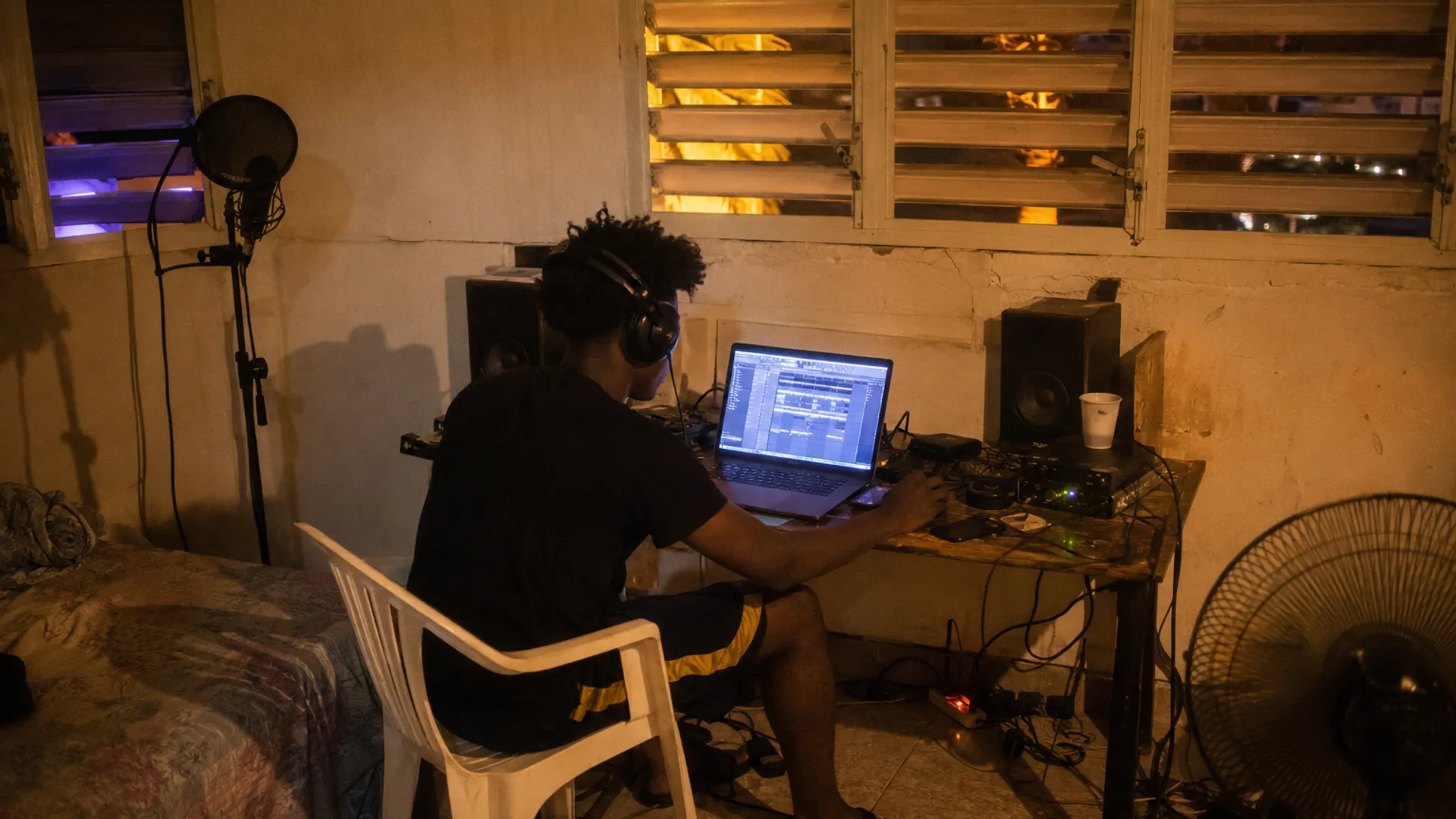


In short. Between 2016 and 2022, Guadeloupe restarts Bouyon without a manifesto. Sa Ka Débodé by Bilix (12 January 2016) marks the visible relaunch, followed by Olé Olé (2017), the Kevni-Edday-VJ Ben crossings (2018-2019) and the collective marker 50/50 by Team Bwè Tou Sa (2020). A bridge generation, neither first wave nor New Bouyon Wave.
Guadeloupe, 2014. Suppa is gone, the first Gwada wave has quietly faded. Nobody yet knows that in two years a Bilix single will restart the wire, and that this silent relaunch will prepare the 2023 New Bouyon Wave.
You just discovered Bouyon Gwada through TIITII NBA, 1T1 or a Reels, and you wonder what happened between Yellow Gaza and the current wave. You are in the right place: this chapter tells the zone everyone skips. We are going to see how Bilix, DJ Weez, Kevni, Edday, Team Bwè Tou Sa reconnected the cables between 2016 and 2022, the generation the New Bouyon Wave does not replace, but inherits.
After 2013: the hollow
In 2013, the first Bouyon Gwada wave loses Suppa. This is not only an artist's death. It is a break in the thread connecting Dominica, Guadeloupe, Vador's nights, the Gaza Crew, Yellow Gaza and the underground energy chapter IV has just established. The scene does not switch off in one moment. It keeps living in phones, private parties, old files, DJs who keep a few tracks on their USB sticks. But it loses its storefront. It loses its narrative. It loses the public feeling of moving together.
Between 2014 and 2016, two errors must be avoided. The first would be to say nothing happens anymore. False: the public already knows Bouyon, artists already know how to ride it, and several first-wave passeurs remain in circulation. The second would be to believe the 2023 New Bouyon Wave appears without roots. False too. The 2016-2022 period is precisely where the material starts circulating again: first-wave reflexes, new artists coming from dancehall, local producers, YouTube clips, streaming platforms, community radio.
Doc J is the proof. A first-wave voice, he does not stop with it. In 2014 and 2015, he uploads eight bouyon-labelled tracks to his SoundCloud, including Poukwa Sa Gwo with DJ Bryce and, in October 2015, RIP Suppa. In 2017, Du Sale comes out on a production credited to WeeZz. In April 2018, DJ Skaylone invites him on I See You Baby (Bouyon Remix). In May 2019, he releases the video for Ayen Ki Taw. The thread between the two eras also runs through him.
He is not the only one. Weelow uploads Barça (Bouyon) in March 2014, then Négro frajil and Alright in 2015. Arendi releases En Route in July 2015 and Gadéw in April 2017, each time with "Bouyon" in the title. Miky Ding La follows with Yo pa kontan in March 2018 and An té ké baw with HB War in December. In February 2019, DJ Beaw brings Weelow, Doc J and Miky Ding La together on the Bouyon Shatting Mixtape, and in July Weelow releases Splash on the Flute Riddim. The first wave does not disappear. It loses its shop window, not its voices.
This transition does not look like a generation with a manifesto. It looks like a repair job. Nobody stands up saying: here is the new era. Singles come out. Collaborations cross. Names return in different configurations. Guadeloupe does not rebuild a scene by decree; it rebuilds it by repetition.
The relaunch has no manifesto. It has credits, DJs, choruses that come back.
2016: DJ Weez and Bilix restart the wire
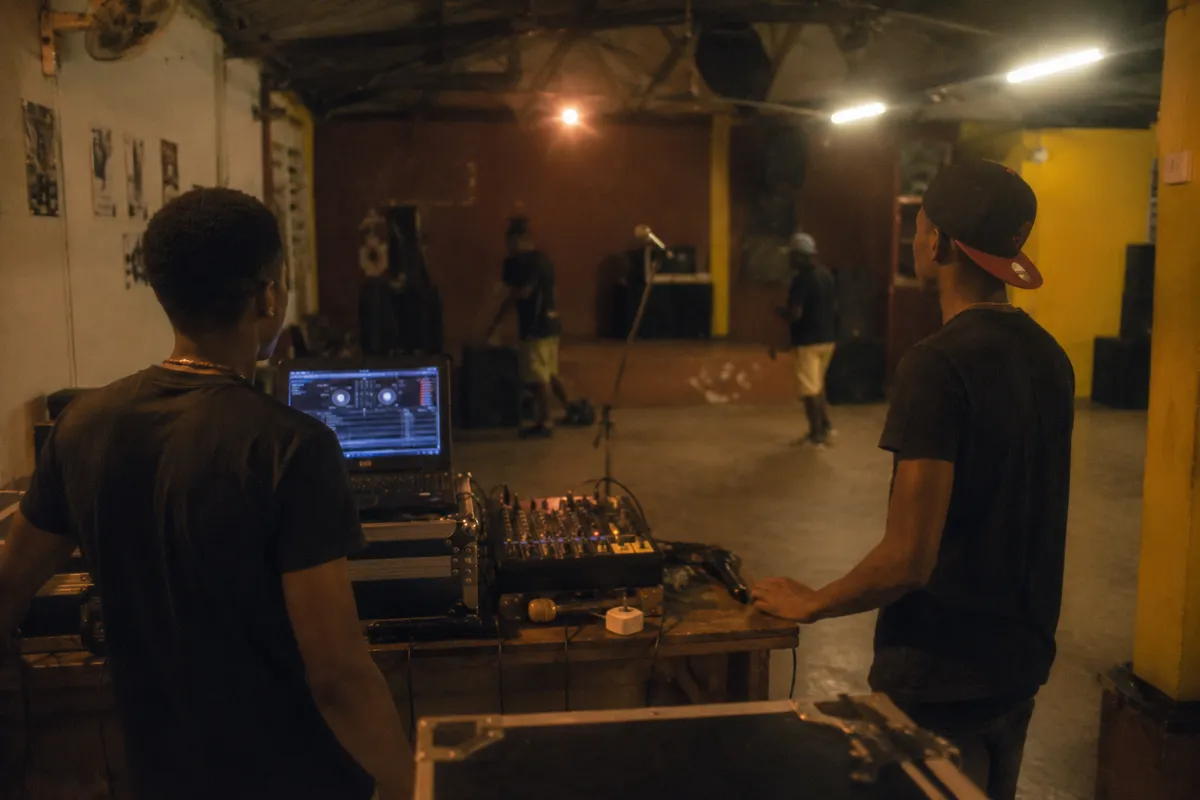
The first visible relaunch point arrives in 2016 with Bilix feat Mr Boka. Sa Ka Débodé. The public trace is clear: Amazon Music gives a 12 January 2016 release date, while Shazam credits Bilix as performer and lists DJ Weez, Lsbeatz Litleboy and Franck Offranc in composition/lyrics credits. A Bizouk event on 27 February 2016 then announces Bilix and Mr Boka in showcase, with DJ Weezz on the bill and a music listing that places dancehall, soca, Bouyon, zouk and rap in the same night.
That detail changes the reading. DJ Weez is not just a name placed beside Bilix; he sits inside the technical mechanics of the relaunch. He belongs to those who make Bouyon playable again, exportable again, programmable in parties again. The track circulates because it has immediate party energy, but also because it arrives at the right time: after the silence, before total platform visibility, in a Guadeloupe that already tasted Bouyon and needs a new entry point.
Bilix occupies a specific position. Public sources link him to Anse-Bertrand and to a solo trajectory already formed. He does not arrive as a direct heir of Gaza Girls or Yellow Gaza. He arrives with a wider color: dancehall, Afro-Caribbean vibes, party single, viral clip, diaspora circuit. This is exactly what the Gwada transition will do several times: take artists who are not locked inside Bouyon, then make them cross Bouyon when the public is ready.
2017: DJ GUYGUY and the Olé Olé marker
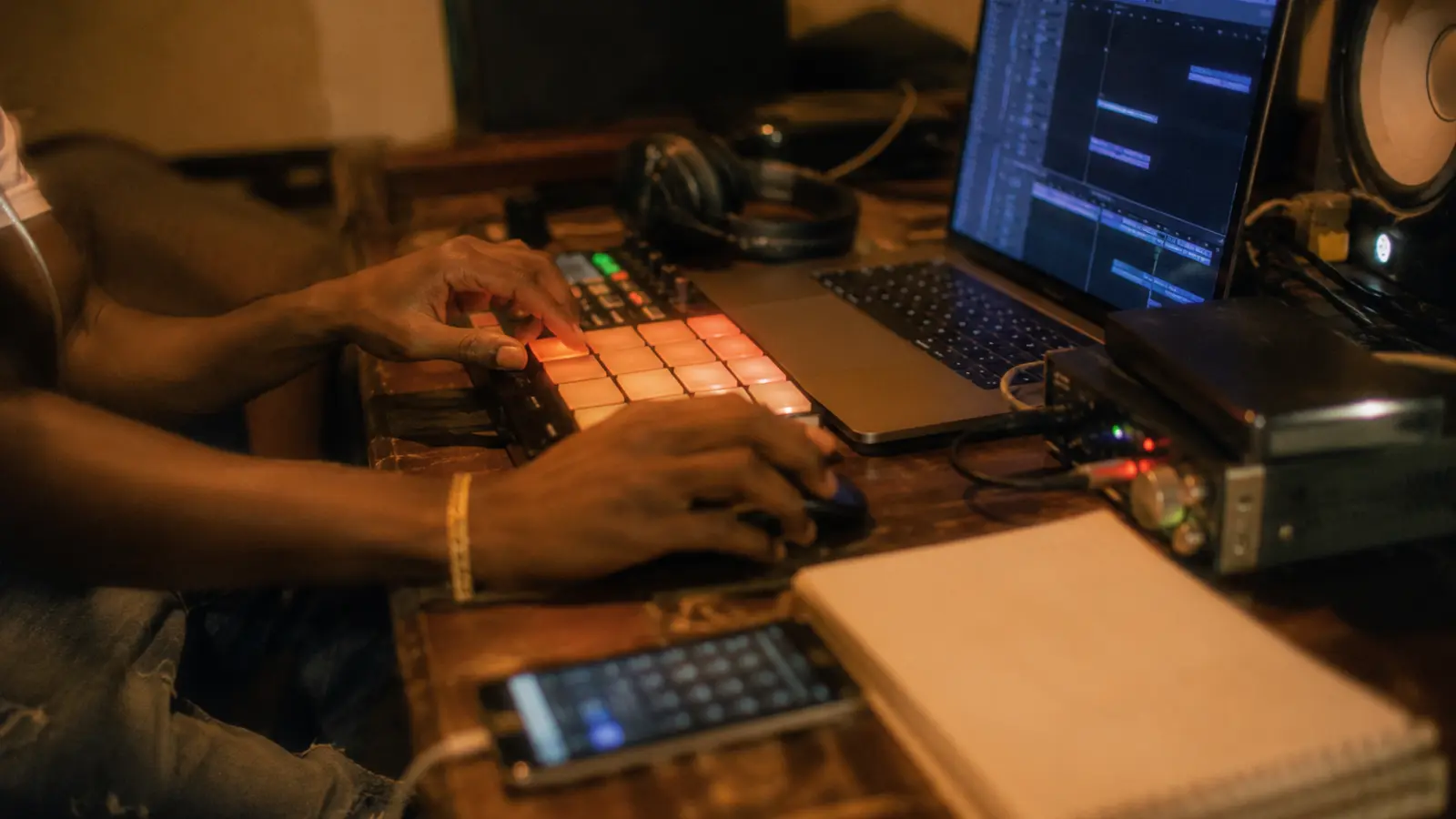
DJ GUYGUY's public Bouyon marker arrives with BILIX feat Deejay Guyguy. Olé Olé [BackShot Riddim 2017]. The track exists on SoundCloud via Deejay Guyguy Official and also appears in a Bouyon Mix 2017 Gwada ShowDown tracklist.
Bilix matters here because this chapter already situates him as a 2016 relaunch artist and later Gwada-SXM bridge. The track therefore places DJ GUYGUY inside an identifiable Bouyon circuit, not just a general discography.
DJ GUYGUY therefore appears here as a producer passeur through an identifiable Bouyon track, linked to Bilix and the 2017 Gwada circuit.
2018-2019: Kevni, Bilix, Edday, the crossings
Not everyone who will carry the next wave starts out in Bouyon. Aknose told Loxymore he was "raised in dancehall," and that a cousin pushed him to try something else. 1T1 produced dancehall, drill, trap, rap, zouk and kompa before touching the genre; his first placement, at eighteen, came with a local artist.
After 2016, the transition therefore does not move in a straight line. It moves through crossings. Kevni shows that shift clearly. Qobuz / Music Story first presents him as a Guadeloupean dancehall and reggae artist, noticed in the underground with Corsaire in 2017, then reaching Antillean success in 2018 with the Bouyon single Olaleyley. The important word is passage. Kevni does not leave one identity for another; he crosses registers and lets Bouyon become one of his doors.
In 2019, the crossings become more visible. Ti KoKa brings together VJ Ben, LaRose, Bilix and Edday. Shazam links the track to a 2019 single, RadioMonitor gives 4 January 2019 as release date and shows the track still being detected later on Tropiques FM. This is not just another collaboration. It is a photograph of the scene being welded: DJ/producer, known voices, artists moving between party music, dancehall, Bouyon and radio.
The same year, Qobuz / Music Story connects Kevni to Si Manman'w Té Sav with Drexi and Edday, while noting the million-stream threshold. Again, the transition speaks by cluster. A single track can be an accident. Several crossed tracks, over two years, with the same names returning, form an ecosystem.
Edday appears in this zone as a pivot. He should not be read only through the New Bouyon Wave. He is already circulating before it. His name returns with Bilix, with Kevni, then later with the 2023 scene. That continuity matters: the New Bouyon Wave does not manufacture Edday from nothing; it arrives on a field where Edday already exists as a connection point.
2020: T-BTS and the home studio
1T1 does not read music. He started on drums at three, with his uncle, kept at it for ten years, and his parents bought him his first keyboard around sixteen or seventeen. He plays by ear, and he holds himself to a limit: four productions a month, no more.
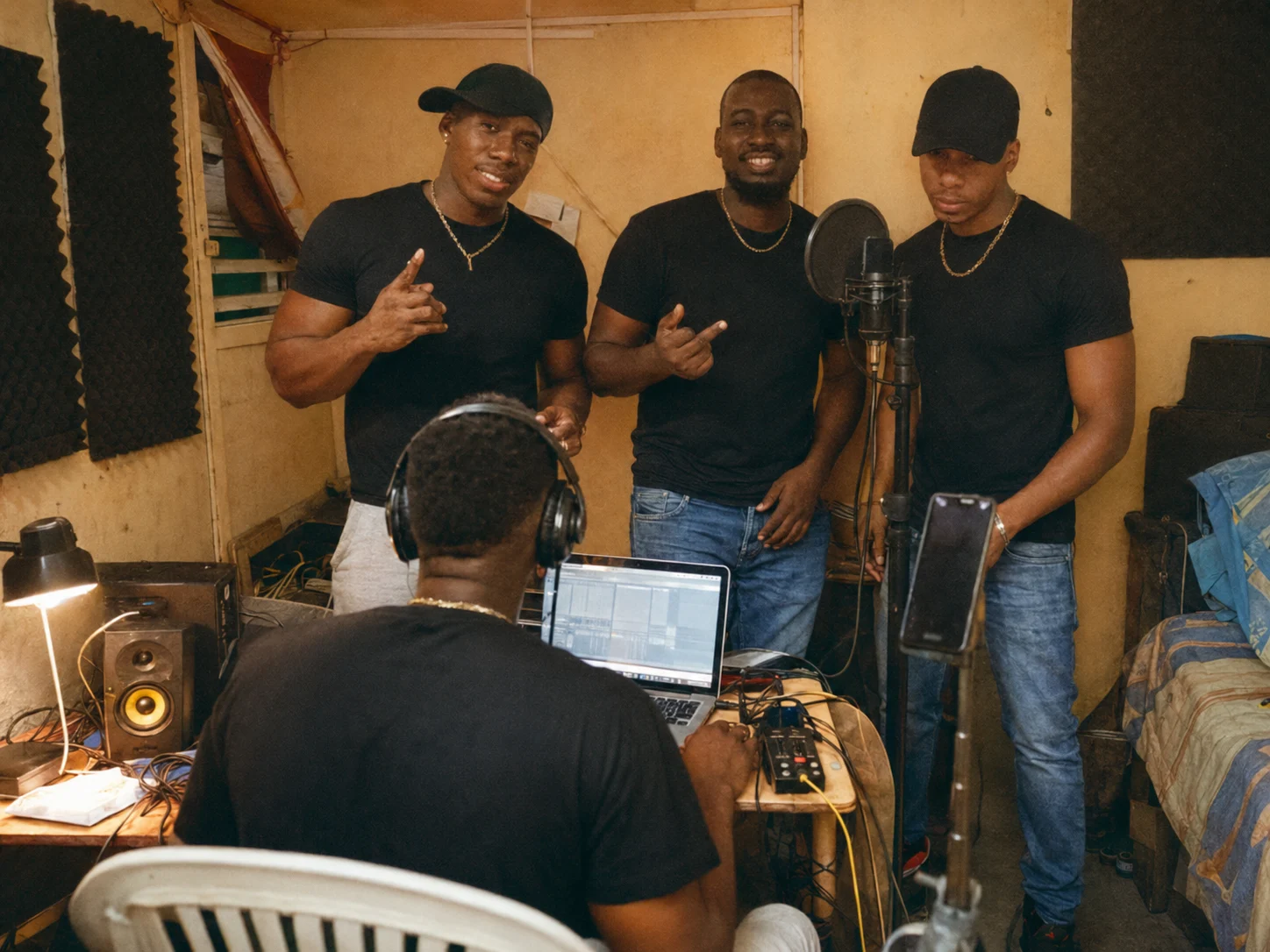
That way of working is what holds when everything else stops. In 2020, the transition changes texture. Party spaces are weakened, nights move less, but production continues. The home studio takes more space. Tracks circulate through clips, platforms, shared snippets, artist profiles. In that zone, Team Bwè Tou Sa becomes an important marker.
50/50, publicly released on 20 November 2020 on a DJ Skaylone production, is attached to Team Bwè Tou Sa and LESTEF KJF BOYZ. That marker is what matters here: it fixes a 2020 collective line, with its voices, group energy and way of keeping Bouyon circulating while physical stages are weakened.
Lunik, FLW and MA6MO form the collective line here. Lestef KJF enters as a regional force that will later grow much larger. Bouyon Gwada is no longer only first-wave memory or a relaunch hit. It becomes a factory, with teams, features, videos, names returning from one track to another.
First-wave voices are part of that factory too. In March 2020, Arendi releases Rété Akaz aw, on a Boutcha Bwa Production composition: the video is now past 1.8 million views. On 22 October 2021, Je l'ai vu, with Holly G, comes out in the Bouyon Kings Mixtape series, co-produced by Vadore Concept: over 15 million views by October 2026. Vador's label never closed. In January 2022, it releases Koké La (Bouyon Kings) by Yellow Gaza and Miky Ding La.
2022: before the explosion, the ground
By 2022, the ground is ready but not yet named. Artists have learned to collaborate. Producers have learned to publish directly. The public has relearned how to hear Bouyon Gwada that comes neither exactly from Dominica nor only from the Gaza/Yellow Gaza first wave. Guadeloupe now has several support points: Bilix and the 2016 relaunch, Kevni and the dancehall/Bouyon bridges, Edday as collaboration pivot, Team Bwè Tou Sa as a 2020 collective marker, Lestef KJF as regional power.
This period prepares the New Bouyon Wave without naming it yet. That is why it deserves its own chapter. If the story jumps from Suppa 2013 to TIITII NBA / 1T1 / Aknose 2023, it gives the false impression that a whole generation appears from nowhere. In reality, the public has been retrained. Platforms have been tested. Collaborations have proven that borders between dancehall, Bouyon, soca, zouk and rap can move without breaking the scene.
The Gwada transition does not need mythology. It needs correct placement. It is not the origin of Bouyon in Guadeloupe. It is not yet the New Bouyon Wave. It is the moment when the island starts producing enough signs again for the next step to become possible.
The New Bouyon Wave does not land on an empty shore. It lands on ground already stepped on.
What the transition hands to 2023 is not only a list of names. It is a method. Make with little. Post quickly. Cross voices. Let riddims circulate. Accept that Bouyon Gwada does not have one single shape. Keep Dominica in memory without asking permission to exist locally.
That method explains why the New Bouyon Wave can arrive with such speed afterward. When TIITII NBA, 1T1, Aknose, Softee, Nils, LeJuh, Theomaa and the others take the relay, they do not invent the public's desire. They catch it at a moment when platforms finally make visible what was already being built in layers.
Chapter V therefore closes a blind spot. Guadeloupe does not wait until 2023 to restart. It restarts in jolts from 2016, adds a Bouyon producer marker in 2017, consolidates in 2018-2019, structures in 2020, then thickens in 2022. After that, it becomes possible to speak of a wave. Before the wave, there is the current.
FAQ : common questions about the Gwada transition
What exactly is the Gwada transition? The 2016-2022 period of Bouyon in Guadeloupe: after Suppa's death in 2013, a bridge generation (Bilix, DJ Weez, Kevni, Edday, Team Bwè Tou Sa, Lestef KJF) restarts the genre without a manifesto. Neither the first Gwada wave (Vador, Yellow Gaza) nor yet the New Bouyon Wave (2023), a necessary corridor between the two.
Which single marks the relaunch? Sa Ka Débodé by Bilix feat Mr Boka, released on 12 January 2016. Shazam credits DJ Weez, Lsbeatz Litleboy and Franck Offranc in composition. A Bizouk showcase on 27 February 2016 confirms the track's public entry into the Gwada circuit.
Who is Bilix? A Guadeloupean artist from Anse-Bertrand, already established solo before the Bouyon relaunch. His color is wider than Bouyon alone (dancehall, Afro-Caribbean, dancefloor), which lets him play a pivot role in 2016-2019, then a Gwada-Saint-Martin bridge on On Plonge with Tolly Boyz/YMW in 2017.
Why does Kevni matter in the transition? Kevni illustrates the dancehall/Bouyon crossing between 2018 and 2020. Olaleyley (2018), Si Manman'w Té Sav (2019, with Drexi and Edday, over one million streams), Top Boy (2020). His trajectory proves Bouyon Gwada is not isolated: it dialogues with dancehall and soca.
Why does Team Bwè Tou Sa appear in 2020? T-BTS (Team Bwè Tou Sa) sets a collective line in 2020 with the single 50/50 released on 20 November 2020 with LESTEF KJF BOYZ. The group (Lunik, FLW, MA6MO around Gama Lab) gives shape to the home studio in a period when physical stages are weakened.
Is the Gwada transition the same as the New Bouyon Wave? No. Two distinct but connected generations. The transition prepares the ground (platform method, crossed collaborations, home studios) without yet naming itself. The New Bouyon Wave (2023) inherits the method and labels it. Without the transition, the NBW would have arrived without memory.
Where can I listen to these releases today? Sa Ka Débodé on Amazon Music and Shazam. Olé Olé on SoundCloud (BackShot Riddim 2017). Ti KoKa (VJ Ben feat LaRose, Bilix & Edday, 2019) on Shazam. Si Manman'w Té Sav and Top Boy via Qobuz / Music Story on the Kevni profile. 50/50 (T-BTS feat LESTEF KJF) on Apple Music.
